
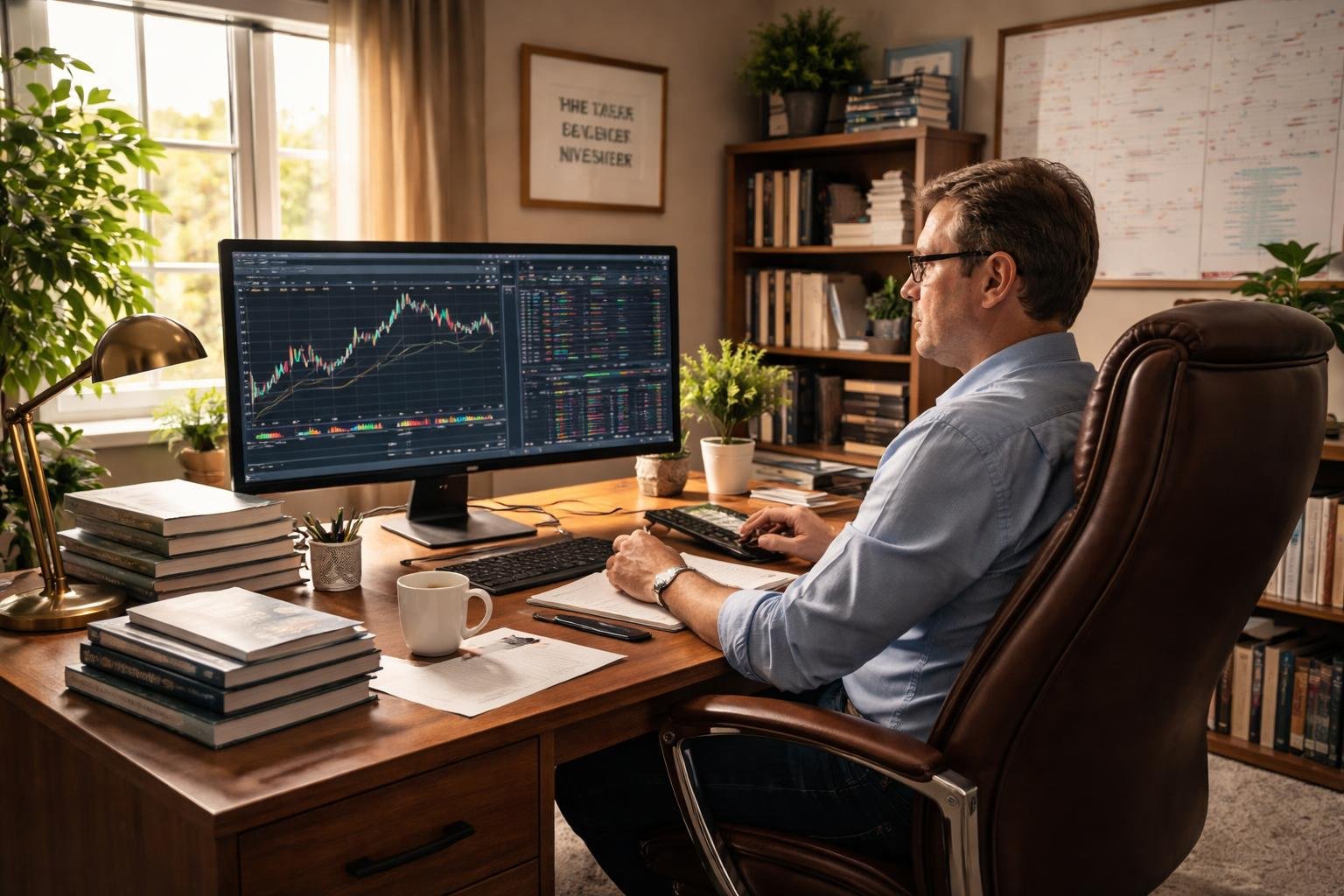
If you ask successful traders what separates winners from losers in the markets, most won’t talk about strategy sophistication, technical indicators, or even win rates. They’ll tell you it all comes down to risk management.
This truth applies equally whether you’re manually trading or using platforms like Blustar AI stock trading systems. In fact, risk management becomes even more critical with automated trading because you’re delegating execution decisions to algorithms operating without your moment-to-moment oversight.
Understanding how risk management works—and what to look for in Blustar AI stock platforms—can mean the difference between building wealth systematically and experiencing devastating losses that set your financial goals back years.
Let’s explore the fundamental principles of risk management in automated trading and what every investor should understand before deploying capital through AI-powered systems.
Why Risk Management Matters More Than Strategy
Here’s a uncomfortable truth: you can have the most sophisticated trading strategy in the world, but without proper risk management, you’ll eventually lose everything.
Consider two hypothetical traders:
Trader A has a strategy that wins 70% of the time with an average win of $100. Sounds excellent, right? But when they lose, they lose $500 on average. Without proper risk controls, a few consecutive losses can wipe out weeks or months of gains.
Trader B has a strategy that only wins 50% of the time—essentially a coin flip. However, they strictly limit losses to $100 while allowing wins to run to $300 average. Over time, Trader B consistently grows their account while Trader A experiences wild swings and potential ruin.
The difference isn’t the strategy’s win rate—it’s risk management.
When evaluating Blustar AI stock trading platforms or any automated system, understanding the risk management framework is more important than being dazzled by performance statistics. Past returns without context about risk controls tell you very little about future sustainability.
The Core Principles of Trading Risk Management
Whether implemented by humans or Blustar AI stock algorithms, effective risk management rests on several foundational principles:
1. Position Sizing: Never Risk Too Much on a Single Trade
Position sizing determines how much capital you allocate to each individual trade. This is arguably the most critical risk management component.
The 1-2% Rule: Conservative traders never risk more than 1-2% of their total account on any single trade. If you have a $10,000 account, you’d risk no more than $100-200 per trade.
Why This Matters: With 2% risk per trade, you could theoretically lose 50 consecutive trades before your account was depleted. While 50 straight losses is statistically unlikely with any reasonable strategy, this cushion allows you to survive inevitable losing streaks.
In Blustar AI Stock Trading: When evaluating automated platforms, ask about maximum risk per trade. Quality systems like Blustar AI stock platforms should clearly specify this parameter. Some strategies might use 1.4% risk (like certain gold trading approaches), while others might use up to 5% for assets with different volatility profiles.
The Trade-Off: Lower risk per trade means slower account growth, but much higher probability of long-term survival. Higher risk per trade can accelerate gains but increases the chance of significant drawdowns that psychologically devastate investors and practically impair compounding.
2. Stop Losses: Automatic Exit Points
A stop loss is a predetermined price level where you exit a losing trade, limiting damage.
The Concept: Before entering any trade, you define exactly how much you’re willing to lose. If the market moves against you and hits that price, you exit automatically—no exceptions, no hoping it will come back.
Emotion Elimination: Stop losses are crucial because they remove discretion from loss-taking. Human traders often move their stops or refuse to honor them when positions move against them, turning small losses into catastrophic ones.
In Blustar AI Stock Trading: Automated systems excel at stop loss implementation because they execute without emotion. When a Blustar AI stock trading bot hits its stop loss level, it exits immediately without the hesitation, hope, or denial that plague manual traders.
Dynamic vs. Fixed Stops: Some systems use fixed stop losses (exit if the price moves X% against you), while others employ dynamic stops that adjust based on volatility or other factors. Neither is inherently superior—what matters is consistent application.
3. Risk-Reward Ratios: Making Math Work in Your Favor
The risk-reward ratio compares how much you stand to lose versus how much you could potentially gain on a trade.
The Calculation: If you risk $100 to potentially make $300, your risk-reward ratio is 1:3. This means for every dollar risked, you’re targeting three dollars in potential profit.
Why It’s Critical: With a 1:3 risk-reward ratio, you only need to be right 25% of the time to break even. At 50% win rate, you’re highly profitable. This mathematical relationship is what allows Blustar AI stock trading systems with modest win rates to generate consistent returns.
Minimum Acceptable Ratios: Professional traders typically target minimum 1:2 risk-reward ratios, though many aim for 1:3 or better. Systems offering worse ratios (1:1 or lower) require extremely high win rates to overcome commissions and provide meaningful returns.
In Blustar AI Stock Platforms: Examine how the system identifies targets versus stops. A platform showing 85% win rate might still lose money if the risk-reward ratio is poorly structured. Conversely, systems with 50-60% win rates can be highly profitable with excellent risk-reward implementation.
4. Maximum Drawdown: Surviving the Worst Periods
Maximum drawdown measures the largest peak-to-trough decline in account value during a specific period.
What It Tells You: If a Blustar AI stock trading system shows a maximum historical drawdown of 15%, that means at some point, an investor would have seen their account value drop 15% from its highest point before recovering.
Psychological Reality: Drawdowns are inevitable in any trading approach. The question isn’t whether you’ll experience them, but whether you can psychologically and financially tolerate them when they occur.
The Sleep Test: A useful guideline is that your maximum drawdown tolerance should be the number you can watch decline without losing sleep or making panic decisions. For some investors, that’s 10%. For others, it might be 25% or more.
Recovery Mathematics: A 20% drawdown requires a 25% gain to recover. A 50% drawdown requires a 100% gain. This asymmetry means that protecting capital during downturns is easier than recovering from major losses.
In Blustar AI Stock Systems: Before committing capital, understand the historical maximum drawdown. If the system shows 25% maximum drawdown but you can’t tolerate more than 10% without panicking, that’s a mismatch regardless of the system’s long-term returns.
5. Diversification: Not Putting All Eggs in One Basket
Diversification spreads risk across multiple uncorrelated positions, strategies, or asset classes.
Strategy Diversification: Some Blustar AI stock platforms offer multiple strategies (gold trading, Bitcoin trading, forex trading) that perform differently under various market conditions. When one strategy underperforms, another might compensate.
Asset Class Diversification: Trading across different assets (commodities, cryptocurrencies, currencies) reduces the risk that a single market event destroys your portfolio.
Time Diversification: Some systems employ strategies operating on different timeframes—some holding positions for hours, others for days or weeks. This reduces the risk that all positions correlate during a particular market event.
The Diversification Paradox: While diversification reduces risk, it also moderates returns. A perfectly diversified portfolio will never achieve spectacular returns, but it also dramatically reduces the probability of catastrophic losses.
In Blustar AI Stock Trading: Platforms offering multiple specialized bots (like separate gold, Bitcoin, and forex strategies) allow users to diversify automated trading approaches. Some investors run all available bots simultaneously, while others select specific strategies matching their risk tolerance.
Advanced Risk Management Concepts
Beyond the fundamentals, sophisticated risk management includes additional layers of protection:
Correlation Management
Correlation measures how closely two assets move together. If all your positions move in the same direction simultaneously, you’re not actually diversified.
The Problem: During the 2008 financial crisis, many “diversified” portfolios collapsed because all assets became highly correlated—everything dropped together.
The Solution: Quality Blustar AI stock platforms should trade assets with low correlation. Gold, Bitcoin, and EUR/USD often move independently, providing genuine diversification rather than the illusion of it.
Monitoring Correlation: During extreme market stress, correlations temporarily spike toward 1.0 (everything moves together). Risk management systems should recognize these periods and potentially reduce overall exposure.
Volatility Adjustment
Volatility refers to how much an asset’s price fluctuates. Higher volatility requires different risk management than lower volatility.
Fixed vs. Volatility-Adjusted Risk: A fixed 2% risk per trade makes sense for stable assets but might be excessive for highly volatile ones. Sophisticated systems adjust position sizes based on current volatility levels.
The ATR Approach: Average True Range (ATR) is a common volatility measure. Systems might set stop losses at 2x ATR, meaning stops automatically widen in volatile markets and tighten in calm ones.
In Blustar AI Stock Platforms: Different bots may employ different volatility management approaches. Gold trading might use tighter stops due to more predictable volatility patterns, while Bitcoin trading might use wider stops to accommodate crypto’s infamous price swings.
Time-Based Risk Management
Risk management shouldn’t be static—it should adapt to changing conditions.
News Event Filters: Sophisticated systems reduce or eliminate positions before major economic announcements that can cause unpredictable price movements.
Weekend Risk: Some Blustar AI stock forex strategies might close positions before weekends to avoid gap risk when markets reopen Monday with price jumps.
Session Awareness: Certain strategies only trade during specific market sessions (London, New York) when liquidity and behavior patterns are optimal.
Account-Level Risk Management
Individual trade risk management is crucial, but so is managing total account exposure.
Maximum Concurrent Risk: Even with 2% risk per trade, if you have 10 simultaneous positions, you’re exposed to 20% total risk. Some systems cap total exposure regardless of individual position risk.
Scaling During Drawdowns: Conservative approaches reduce position sizes during losing streaks, risking less when recent results suggest the current market environment doesn’t favor the strategy.
Scaling During Winning Streaks: Conversely, some systems increase position sizes after wins, compounding gains during favorable periods.
The Debate: Position scaling remains controversial. Some traders believe you should maintain consistent risk regardless of recent results. Others argue that market conditions change, and adjusting exposure makes sense.
Red Flags: Poor Risk Management Warning Signs
When evaluating Blustar AI stock trading platforms or any automated system, watch for these warning signs of inadequate risk management:
Warning Sign 1: No Clear Risk Parameters
The Problem: If a platform can’t clearly articulate maximum risk per trade, maximum drawdown, or stop loss methodology, that’s a major red flag.
What to Look For: Reputable Blustar AI stock systems should transparently communicate risk parameters. “We use machine learning to optimize risk” isn’t an answer—it’s evasion.
Warning Sign 2: Excessive Leverage
The Problem: Some systems promote returns achieved through high leverage (borrowing to trade larger positions). While leverage amplifies gains, it equally amplifies losses.
What to Look For: Understand exactly what leverage, if any, is being employed. Leverage above 3:1 for retail traders is generally inadvisable regardless of the strategy.
In Blustar AI Stock Trading: Different markets offer different leverage opportunities. Forex allows high leverage, but that doesn’t mean you should use it. Quality platforms use leverage conservatively if at all.
Warning Sign 3: No Worst-Case Scenarios
The Problem: Platforms showing only best-case or average results without discussing worst-case scenarios are hiding critical information.
What to Look For: Ask about maximum drawdown, longest losing streak, and worst month on record. If this information isn’t readily available, be very cautious.
Warning Sign 4: “Can’t Lose” Promises
The Problem: Any system promising guaranteed returns or claiming you can’t lose money is either fraudulent or dangerously naive.
What to Look For: Honest Blustar AI stock platforms acknowledge that losses are inevitable. Risk management aims to make losses manageable and recoverable, not eliminate them entirely.
Warning Sign 5: Unrealistic Win Rates Without Context
The Problem: A 90% win rate sounds impressive, but if the 10% of losing trades are catastrophic, the system is fundamentally flawed.
What to Look For: Win rates mean nothing without corresponding risk-reward ratios and maximum loss information. A 50% win rate with 1:3 risk-reward beats a 90% win rate with 1:1 risk-reward.
Psychological Risk Management: The Human Element
Even with Blustar AI stock trading platforms handling execution, human psychology remains a risk factor:
The Panic Override Problem
The Risk: When markets get volatile or drawdowns occur, investors often panic and shut down systems exactly when they should stay the course.
The Solution: Before starting, clearly define under what circumstances you’d legitimately stop a system (maximum drawdown exceeded, strategy stops performing as designed) versus when you’re just experiencing normal variance.
Implementation: Write down your exit criteria before you experience any losses. During a drawdown, refer to this document rather than making emotional decisions.
The Overconfidence Problem
The Risk: After a winning streak, investors often become overconfident and allocate more capital than appropriate, just before a drawdown occurs.
The Solution: Maintain predetermined position sizes regardless of recent results. Blustar AI stock platforms should make this easy by automatically managing position sizing according to account balance.
The Comparison Problem
The Risk: Comparing your Blustar AI stock trading results to friends, social media posts, or other investments can create pressure to take inappropriate risks.
The Solution: Focus on whether your results align with your specific goals and risk tolerance, not whether you’re “beating” someone else.
Risk Management Checklist for Blustar AI Stock Trading
Before deploying capital to any automated trading platform, verify these risk management elements:
☐ Maximum Risk Per Trade Clearly Defined
- What percentage of account is risked per trade?
- Is this consistent across all strategies or does it vary?
☐ Stop Loss Methodology Transparent
- How are stop losses determined?
- Are they guaranteed to execute or can slippage occur?
☐ Maximum Drawdown History Available
- What was the worst historical drawdown?
- How long did recovery take?
☐ Position Sizing Algorithm Explained
- How does the system calculate position sizes?
- Does it adjust for volatility?
☐ Total Account Risk Capped
- Is there a limit on total concurrent exposure?
- What’s the maximum percentage of account at risk simultaneously?
☐ Diversification Strategy Clear
- What assets/strategies are involved?
- How correlated are they?
☐ Risk-Reward Ratios Documented
- What’s the average risk-reward ratio?
- How does this align with win rates?
☐ Worst-Case Scenarios Disclosed
- What was the worst losing streak?
- What was the worst single trade loss?
☐ Leverage Usage Transparent
- Is leverage employed?
- At what levels?
☐ Personal Risk Tolerance Aligned
- Can you psychologically handle the maximum historical drawdown?
- Does the risk per trade align with your comfort level?
Questions to Ask About Blustar AI Stock Platform Risk Management
Before committing capital, ask these specific questions:
- “What is the maximum percentage of my account at risk on any single trade?”
- Acceptable answer: Specific percentage (1-5% depending on strategy)
- Red flag: “It varies” or “We optimize dynamically” without specifics
- “What was the maximum historical drawdown for this strategy?”
- Acceptable answer: Specific percentage with timeframe context
- Red flag: “We don’t track that” or only showing best-case results
- “How do you determine stop loss levels?”
- Acceptable answer: Clear methodology (technical levels, ATR-based, percentage, etc.)
- Red flag: Vague references to “AI optimization” without concrete explanation
- “What happens during extreme market events like flash crashes?”
- Acceptable answer: Specific protocols (wider stops, position reduction, temporary halt)
- Red flag: “Our AI handles it” without explaining how
- “How many consecutive losses has the system experienced historically?”
- Acceptable answer: Specific number with context
- Red flag: Claiming no significant losing streaks ever occurred
- “What percentage of winning trades versus losing trades?”
- Acceptable answer: Specific win rate with corresponding risk-reward context
- Red flag: Only citing win rate without discussing average win/loss sizes
- “How do I know my capital is protected?”
- Acceptable answer: Capital stays in your brokerage account; system trades via API
- Red flag: Platform holds your funds directly
The Capital Preservation Mindset
Professional traders often say: “Rule number one is don’t lose money. Rule number two is don’t forget rule number one.”
This mindset should guide your approach to Blustar AI stock trading:
Focus on Avoiding Large Losses: Spectacular gains are exciting, but avoiding devastating losses is more important. A 50% loss requires a 100% gain to recover. Protect capital first, grow it second.
Accept That Losses Are Inevitable: No Blustar AI stock platform will win every trade. Risk management isn’t about preventing losses—it’s about ensuring losses are manageable and don’t threaten your ability to continue trading.
Understand Your Personal Risk Capacity: Risk tolerance is personal. A 25% drawdown might be completely acceptable to one investor while another can’t sleep with a 10% drawdown. Neither is wrong—they simply need different risk parameters.
Think in Probabilities, Not Certainties: Trading is a probabilistic endeavor. Even with 80% win rates, you’ll experience losses. Risk management ensures you survive the 20% to benefit from the 80%.
Monitoring Risk in Real Time
Once you’re using Blustar AI stock platforms, ongoing monitoring ensures risk management remains effective:
Weekly Performance Review: Check current drawdown level, recent win rate, and whether results align with expectations.
Monthly Risk Assessment: Evaluate whether maximum risk parameters have been respected and position sizing remains appropriate for your account size.
Quarterly Strategy Evaluation: Assess whether the risk-return profile continues matching your goals or if adjustments are needed.
Annual Comprehensive Review: Conduct deep analysis of all risk metrics, comparing actual results to initial expectations and adjusting allocations accordingly.
The Bottom Line: Risk Management Enables Success
Understanding risk management in Blustar AI stock trading systems isn’t optional—it’s foundational to successful automated trading.
The most sophisticated algorithms, the highest win rates, and the most advanced artificial intelligence mean nothing without proper risk controls. History is littered with strategies that worked brilliantly until a single inadequately managed risk event wiped out years of gains.
Quality Blustar AI stock platforms should be completely transparent about their risk management frameworks. They should clearly communicate maximum risk per trade, historical drawdowns, stop loss methodologies, and worst-case scenarios.
As an investor, your responsibility is to understand these risk parameters and ensure they align with your personal risk tolerance, financial goals, and psychological capacity to withstand inevitable drawdowns.
Risk management isn’t the exciting part of trading—it’s the essential part. Master this foundation, and you create the conditions for sustainable long-term growth. Ignore it, and even the best Blustar AI stock trading strategies will eventually lead to disappointment.
Your capital is precious. Protect it first, grow it second, and ensure any platform you use shares this priority.
Ready to explore Blustar AI stock trading platforms with robust risk management? Discover how proper risk controls can help you participate in markets with confidence and discipline.
Disclaimer: All trading involves substantial risk of loss. Risk management reduces but does not eliminate the possibility of losses. This article is for educational purposes only and does not constitute financial advice. Understand the risks fully before trading and consult with qualified financial professionals regarding your specific situation.